Designing Electronics that Work
The book that teaches the practical secrets of electronics design that most engineers learn the hard way.
30-day money-back guarantee • Instant digital access
$49.99 Physical + eBook • $39.99 eBook Only
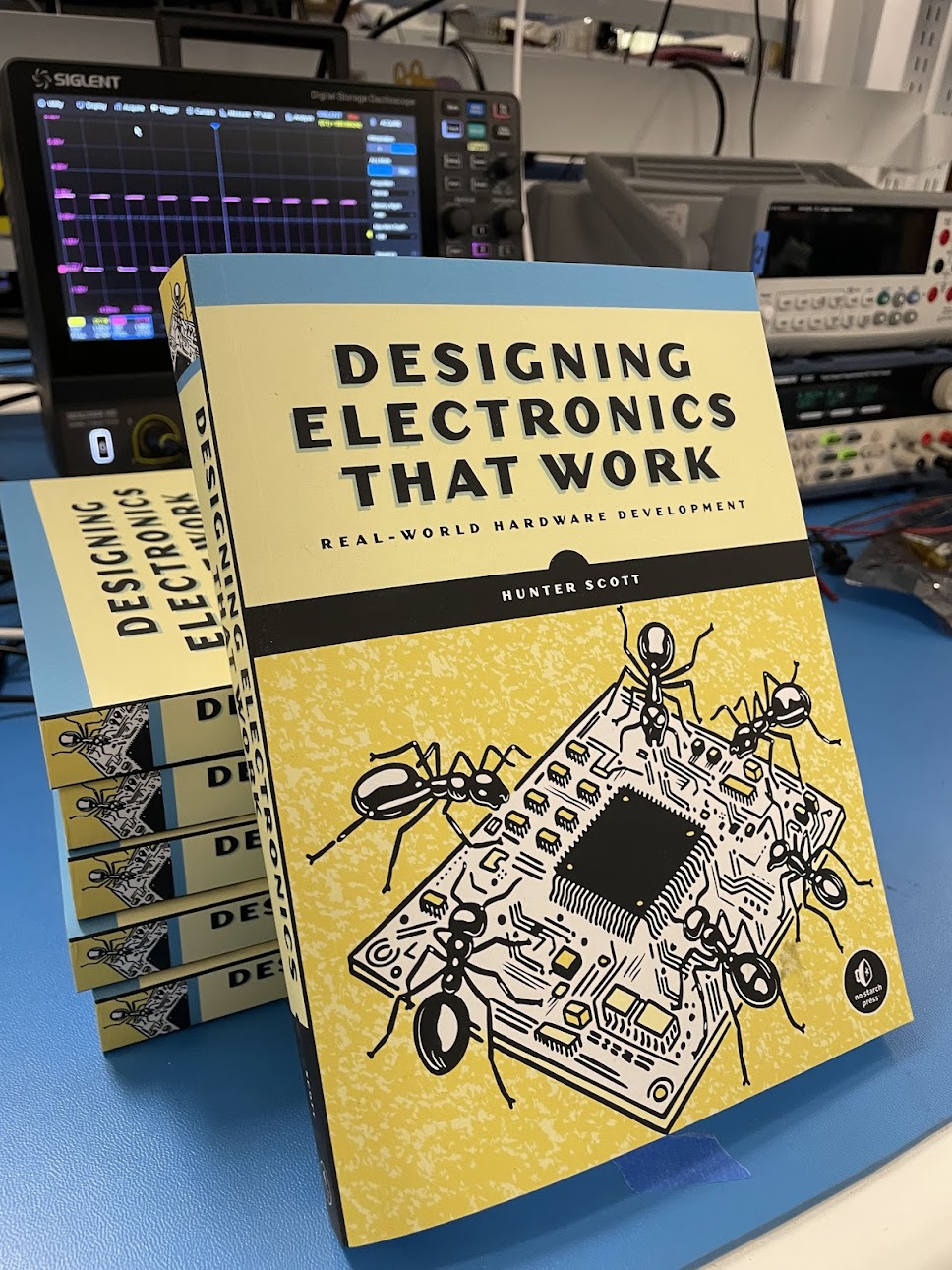
The book that teaches the practical secrets of electronics design that most engineers learn the hard way.
30-day money-back guarantee • Instant digital access
$49.99 Physical + eBook • $39.99 eBook Only
Stop wasting time on "guess and check" engineering and learn the nuances of modern electronics design.
Skip the expensive mistakes. Learn what usually takes years of trial and error in just one book.
Turn your vision into a working prototype. No more getting stuck on the basics.
Deliver production-ready designs that actually work. Become the engineer everyone wants to hire.
Owned by engineers at











Learn the parts of electrical engineering most people only discover the hard way:
Loading video...
Clear, practical guidance whether you are just starting out or building your next product.
Learn the practical stuff that doesn't get covered in class, but is critical for your success as an engineer. Very useful for senior design.
See how to overcome and avoid problems that keep you from finishing projects. Save money and time by needing fewer iterations to get a design working.
Get your electronics to work so you can get back to actually collecting data.
Building an installation? Learn how to make the concept in your head real.
Move faster than your competition, achieve product-market fit, and design products that are actually manufacturable.
Level up your design skills and learn industry best practices that separate good engineers from great ones.
Hunter Scott is an electrical and computer engineer with 15 years of experience in designing and implementing advanced hardware systems. He holds a degree in computer engineering from Georgia Tech and has taken two hardware companies through Y Combinator as a founder. He is a founding engineer at Reach Power, a long-range power beaming startup in Silicon Valley, where he leads technical strategy. He also advises startups and is a venture partner at Pioneer Fund. Scott has worked on a wide range of electronics designs, including medical devices, robotics, communications systems, and high-power millimeter wave phased arrays, and he holds several patents. His personal projects have included designing electronics for a large interactive art installation at Burning Man and developing a Twitter bot that won hundreds of contests. You can learn more about him or get in touch at hscott.net.
Join thousands of engineers who've grown their skills
"...give it a read and you might learn a thing or two, we’re pretty confident it won’t be time wasted!"
"Hunter Scott has written an excellent book"
"...read through it yourself, whether you’re a maker, hobbyist, novice design engineer, or one of those seasoned gray hairs who know how to hold their tongue at exactly the right angle when making adjustments."
30-day money-back guarantee • Instant access
The Art of Electronics is a wonderful book, but doesn't contain a lot of information about the design process. It's mostly theory, which is important, but is missing a lot of the information that I ended up learning the hard way. The Art of Electronics makes a wonderful companion to Designing Electronics that Work.
This books assumes that you know the very basics, like what capacitors and inductors are. If you want to learn about schematic capture, layout, prototyping, testing, and the other steps of electronics design, this is a great book for you. If you want to know how to calculate a frequency response or analyze an op-amp circuit, you should look for a different book.
Designing Electronics that Work is a guide to designing and manufacturing electronics that covers the things most people only learn by experience. This book contains hundreds of tricks and techniques that save you time and money by helping you speed up development and avoid mistakes. It's concise, unique, but most of all, useful. It teaches you how to build elegant hardware that works. Most electronics books answer questions like "what is a capacitor and how does it work?" This book instead addresses questions like, "How do I know which capacitor to buy out of the hundreds of thousands available that all look the same? How do I use a capacitor in my schematic and layout so that it performs in the way I expect?". These kinds of questions are not well covered in electronics books or even in school, but if you don't know the answers, your design won't work and you'll spend days or weeks troubleshooting.
This book is written for new electrical engineering graduates, hobbyists, startups, hardware hackers, artists, researchers, grad students, people who want to move past Arduinos and make custom PCBs, and anyone who wants to get their designs back from fabrication and have them work on the first revision. It contains timesaving techniques and helps you catch bugs before they're fabricated. It cuts through the fluff and gets straight to what you need to know to apply it. If you're designing your first PCB, reading this book may help you avoid mistakes you didn't know you were making. If you're designing your 1000th PCB, this book will act more as a checklist to help illuminate any area you forgot to think about.
I gave the first version of this book away for free for several years, but this version was published with No Starch Press and has benefited from professional editors, designers, and technical reviewers that have worked with me over the last couple of years to make this edition so much better than the old version. All of those people need to get paid, so we have to charge for the book!